October 14, 2025
The Geography of BevAlc Retail Growth
The analysis in this article covers traffic to national and regional BevAlc chains with at least five locations – it does not cover traffic to independent BevAlc retailers.


Key Takeaways
Although headlines often highlight a decline in alcohol consumption – particularly among younger generations – the data paints a more nuanced picture, with liquor store traffic remaining well above pre-pandemic baselines. So how has BevAlc consumer behavior changed since 2019? And where is traffic still growing year-over-year? We dove into the data to find out.
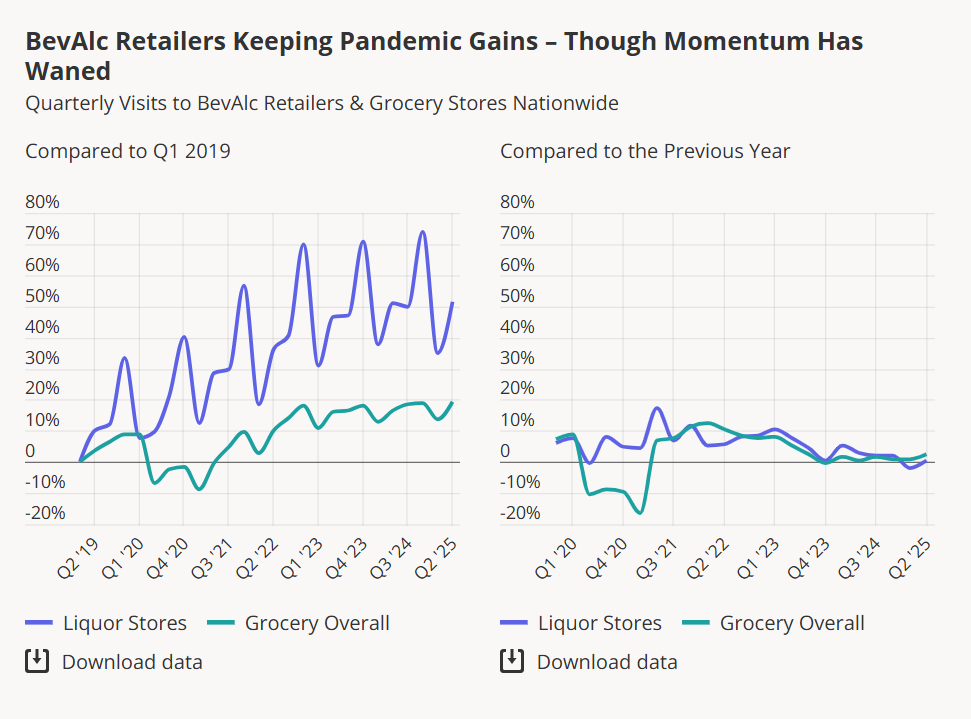
As shown in the left-hand chart below, visits to BevAlc chains skyrocketed since 2018, with traffic hovering 40 to 60% above Q1 ’19 – a significantly larger increase than that seen in the wider grocery sector as a whole. But the year-over-year growth has largely flattened, as seen in the right-hand chart, with overall grocery traffic now seeing higher year-over-year growth in H1 2025.
Taken together, these two charts suggest that BevAlc remains a core part of consumers' shopping mix – even if the explosive, pandemic-era acceleration has stabilized into a new normal.
And although BevAlc visits nationwide have flattened, visitation data highlights regional pockets of BevAlc growth. Florida metros such as Port St. Lucie, Sebastian–Vero Beach, and Homosassa Springs posted some of the strongest year-over-year gains, supported by population inflows and steady tourism activity. Similar momentum appeared in select Southern markets, including parts of Texas and the Carolinas.
Meanwhile, many Northeastern and West Coast markets experienced steady pullbacks. Pennsylvania metros like Sunbury, Johnstown, and Erie registered consistent declines, while California hubs including Sacramento, Modesto, and Stockton saw negative traffic trends as well.
This divergence suggests that national averages mask meaningful local variation: while consumers overall are steady in their liquor purchases, certain regions are emerging as growth hubs while others cool.
The opportunity in BevAlc retail now isn't in chasing broad national growth, but in aligning with regional demand dynamics. In Florida and Texas, where visitation is climbing, retailers can lean into assortment expansion, premium products, and in-store promotions to capture incremental spend. In slower markets like California and the Northeast, focusing on loyalty programs, distribution through grocery stores, and smaller format stores that emphasize convenience and value might yield better results.
Our latest news and trending topics